If your brake pedal pulses mainly when you apply the brakes, the cause is likely somewhere in the braking system. Changes in rotor thickness or surface condition can make the brake pads move slightly as the rotor turns. You feel that repeated movement through the pedal.
A vibration that starts at cruising speed, before you touch the brakes, points in a different direction. Tire condition, wheel balance, wheel or tire runout, and steering or suspension parts may need to be checked. For Waveland drivers, knowing whether the vibration begins while cruising or only while slowing on Highway 90 gives the technician a useful starting point.
Why a Brake Pedal Pulse Shows Up While Slowing Down
Disc brakes slow your vehicle by pressing brake pads against rotating metal rotors. Ideally, both braking surfaces of the rotor remain parallel and pass evenly between the pads.
If the rotor’s thickness or braking force changes as it turns, the pads may move slightly in and out. That movement can pass through the caliper piston and brake fluid, creating the repeating pulse you feel under your foot. Changes in braking force at the wheel may also travel through the steering system and cause the steering wheel to shake.
One common cause is disc thickness variation, which means the rotor is not the same thickness at every point around its braking surface. Audi’s brake-pulsation diagnostic guidance lists several conditions that can contribute to this problem:
- Corrosion or rust on the rotor
- Uneven transfer of brake-pad material
- Continued driving with excessive rotor or hub runout
- Surface changes that create uneven braking force
Drivers often call this a “warped rotor,” but that description does not identify the exact problem. The rotor may have thickness variation, excessive runout, deposits, corrosion, heat-related surface changes, or more than one of these conditions. Measurements are needed to sort them out.
The pulse may also appear only at certain speeds or with a particular amount of pedal pressure. Brake temperature can affect it too. A road test that recreates the conditions described by the driver is an important part of the diagnosis.
Brake Pedal Pulse vs. Cruising-Speed Vibration
The most useful clue is when the vibration starts.
When the vibration starts only during braking
If the vehicle feels smooth at a steady speed but the pedal begins pulsing as soon as you brake, the inspection will usually start with the braking system. The technician may check the rotors, pads, calipers, hubs, and related hardware.
Where you feel the vibration can provide another clue:
- A pulse in the pedal usually reflects movement traveling through the brake system.
- Shaking in the steering wheel may make a front brake, wheel, or steering issue more noticeable.
- Vibration through the seat or body may point toward rear components or a wheel-and-tire condition.
These sensations are useful clues, but they are not diagnoses. Steering-wheel shake does not prove that the front rotors need replacement. A pulsing pedal also does not mean that every brake component is worn.
When the vibration is present before braking
If the steering wheel or vehicle vibrates at cruising speed while your foot is off the brake, the inspection should extend beyond the braking system. Areas that may need attention include:
- Tire condition and wheel balance
- Radial runout in a wheel or tire
- Wheel installation
- Steering or suspension components
Braking can make an existing cruising-speed vibration easier to feel. Audi’s diagnostic guidance notes that tire imbalance, wheel or tire runout, and damaged steering or suspension parts can increase vibration during braking. Reviewing whether it is time for a tire rotation may also help you recognize tire wear patterns that warrant inspection.
The main question is whether braking creates the vibration or simply changes a vibration that is already present.
What an Inspection Checks Before Recommending Pads or Rotors
A proper inspection begins with confirming the symptom instead of guessing from the driver’s description. The technician may ask where you feel the vibration, when it starts, and whether the vehicle needs to warm up before it appears. A road test can then recreate those conditions.
The inspection may include the following checks.
Brake-pad condition and wear pattern
Brake pads should be checked for remaining material, surface condition, and even wear. A difference between the inner and outer pads can reveal a problem that pedal feel alone cannot identify.
For example, an inner pad that is much more worn than the matching outer pad may indicate that the caliper or slide hardware is not moving freely. Replacing rotors without addressing that issue would leave part of the problem unresolved.
Rotor surface and thickness
The technician will look for corrosion, deposits, scoring, heat-related surface changes, and other irregularities. Rotor thickness should also be compared with the vehicle or component manufacturer’s specification.
Brembo’s inspection guidance recommends measuring rotor thickness at several points. The lowest measurement is then compared with the minimum thickness marked on the rotor. Measurements taken around the braking surface can also reveal thickness variation that may be causing the pulse.
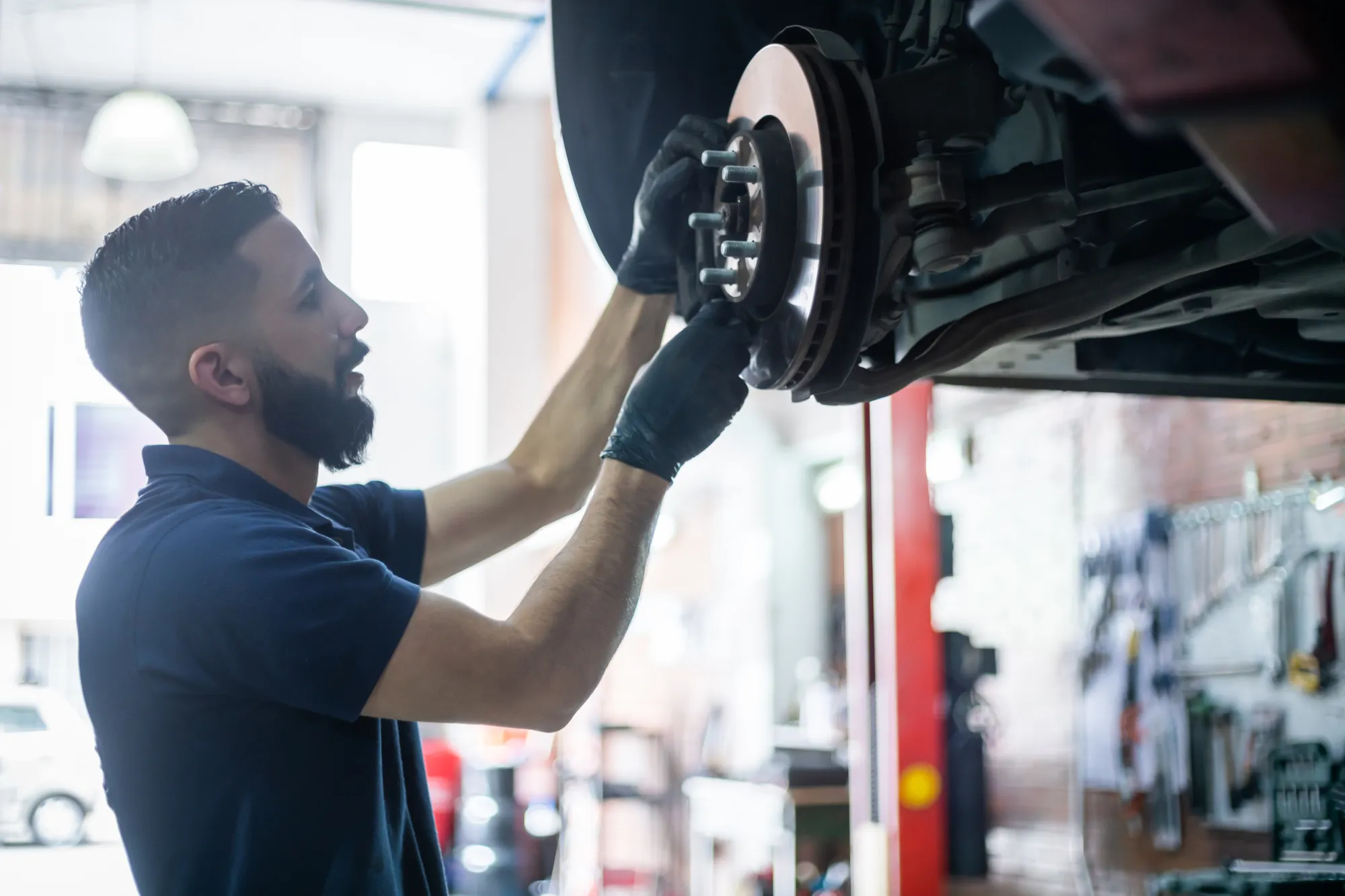
Rotor and hub runout
Runout is the amount of side-to-side movement a component has while rotating. If the symptoms and initial inspection point in that direction, the technician may measure the rotor while it is installed and inspect the hub mounting surface.
Excessive installed runout may come from the rotor, hub, mounting surface, or wheel installation. If the mounting surface is not checked, a replacement rotor may develop the same type of problem.
Caliper and hardware movement
The calipers and related hardware must let the pads apply and release correctly. The inspection should check for restricted slide movement, dragging brakes, and damage that interferes with normal operation.
Uneven pad wear can also show that one side is not working like the other. A caliper should be recommended only when its condition and operation support that repair, not simply because the pedal pulses.
Brake fluid and lines
Brake fluid and brake lines are part of the complete system. They should be inspected for condition and visible problems that could affect brake operation.
Kirk’s Wheel & Tire confirms that its brake inspections cover pads, rotors, calipers, brake fluid, and lines. The shop’s brake services include diagnostics and adjustments, along with pad and rotor replacement and caliper or line repairs when the inspection supports them.
Wheels, tires, steering, and suspension
If the vibration is present while cruising, or the brake measurements do not fully explain it, other components may need to be checked. Tire condition, wheel or tire runout, wheel installation, and relevant steering or suspension parts can all affect what the driver feels.
This broader check helps separate a brake-related pulse from a speed-related vibration. In some cases, both conditions may be present.
Why Brake Pedal Pulsation Does Not Have One Standard Repair
A pulsing pedal does not prove that the pads, rotors, and calipers all need replacement. The correct recommendation depends on measurements, component condition, and manufacturer specifications.
The inspection may support:
- Pad and rotor service due to wear, surface damage, thickness, or runout
- Caliper or hardware repair when movement is restricted or pad wear is uneven
- Closer examination of the hub or wheel installation when installed runout is excessive
- Tire and wheel diagnosis when the vibration occurs without brake application
- Steering or suspension evaluation when looseness or damage increases the vibration
- More diagnosis when the symptom cannot be reproduced and measurements remain within specification
Whether a rotor can be machined or needs replacement depends on its current thickness, minimum-thickness limit, surface condition, and the vehicle manufacturer’s procedures. Pedal feel alone is not enough to make that decision.
What to Tell the Technician About the Pulsation
A clear description can help the technician reproduce the symptom. Before your appointment, note:
- The approximate speed at which the vibration begins
- Whether it happens only when you press the brake pedal
- Any difference between light and firm braking
- Where you feel it, such as the pedal, steering wheel, seat, or vehicle body
- Whether the vehicle must be driven for a while before the pulse appears
- Whether it also vibrates at cruising speed with the brakes released
- Any pulling sensation or brakes that seem slow to release
You do not need to diagnose the problem yourself. These details help the technician recreate the same conditions and decide which parts need closer inspection.