
A tire sidewall indentation can be normal when it is a slight inward depression caused by overlapping material inside a radial tire. An outward bulge or bubble is different: it indicates structural damage and requires replacement. For Waveland drivers, the first step is identifying which condition is present rather than deciding from the word “dent” alone.
An inspection checks the shape, surrounding rubber, inflation and history of the tire. A confirmed construction indentation alone does not call for replacement, but a changing shape, impact damage or pressure loss needs further evaluation. If you cannot tell whether the area dips inward or projects outward, have a tire professional inspect it.
Tire indentation vs bulge: what the shape means
Radial tires contain reinforcing plies. Where that material joins, a slight depression or wavy area can show through the sidewall when the tire is inflated. Michelin describes these construction undulations as a visual characteristic that does not affect tire performance. Michelin’s tire FAQs recommend inspection whenever there is doubt about an indentation.
The useful distinction is the direction of the shape:
- Indentation: The area dips inward relative to the surrounding sidewall. It may be a normal construction feature.
- Bulge or bubble: A localized area protrudes outward. A confirmed sidewall bulge means the tire’s internal structure is damaged.
If you notice a dent in your tire sidewall, describe its shape as clearly as you can. The word “dent” might mean a depression, a cut or an outward lump. A construction indentation can also coexist with separate damage.
A useful question for the inspector is, “Is this the normal overlap in the tire’s construction, or is the tire damaged?” The answer should identify the feature you pointed out. Simply calling it an indentation does not establish its cause. If the finding is normal construction waviness, ask the technician to show you the inward area so you understand what was evaluated. That gives you a clearer reference if you later notice a change, without asking you to judge the tire’s internal condition yourself.
What should you report about the dent?
You do not need to diagnose the tire before describing the problem. Give the technician observations that help establish what changed:
- Which tire and where: Identify the wheel position and the area you noticed.
- When you noticed it: Say whether it was present when the tire was installed or was only recently spotted.
- Whether it has changed: Report a depression becoming more pronounced, a new outward area or nearby cracking.
- Any impact: Mention a curb strike, pothole hit or other significant impact, even if there is little visible damage.
- Pressure and driving symptoms: Report repeated air loss, a tire-pressure warning, new vibration, pulling or rhythmic thumping.
Be clear about what you know. “I first noticed it today” does not necessarily mean “it formed today.” Likewise, if you do not remember an impact, say so rather than guessing at the cause.
For example, a useful description would be: “I noticed an inward dip on the right rear tire today. I do not know how long it has been there, but I have had to add air recently.” That report separates the appearance from the pressure problem. Include both rather than assuming the dip caused the leak. If there has been no air loss or change in how the vehicle drives, report that too; it is useful background, though it does not replace the inspection.
Michelin identifies new vibration, persistent pressure loss, pulling, thumping and tire-pressure warnings as reasons for prompt professional attention. These symptoms need investigation even when the visible indentation appears minor. Michelin’s tire damage guide also explains that significant impact damage can be hidden inside the tire.
Which changes need prompt inspection?
Have a newly noticed or changing sidewall shape checked promptly, particularly after an impact or alongside pressure loss. Cuts, cracks and exposed reinforcing material also need evaluation; deciding whether a crack is superficial requires more than noticing that it is small.
Do not continue driving on a tire with a visible outward bulge or severe sidewall damage. Use a suitable spare if it can be installed safely, or arrange assistance. Do not drive to the shop simply to have the bulge confirmed. Michelin distinguishes normal cord-overlap indentations from bulges requiring immediate replacement in its sidewall guidance.
What does the tire inspection check?
The technician examines the sidewall contour and surrounding rubber for cuts, cracks, scraping, exposed cords and other damage, along with tread condition and inflation. Your account of impacts, air loss and changing symptoms helps determine whether an exterior inspection is enough.
Removal from the wheel is needed in specific circumstances. After a significant impact, the inside may need inspection even if the exterior looks acceptable. USTMA also calls for a complete internal inspection when a tire continually loses pressure or has lost all or most of its pressure. Adding air cannot undo damage caused by running underinflated.
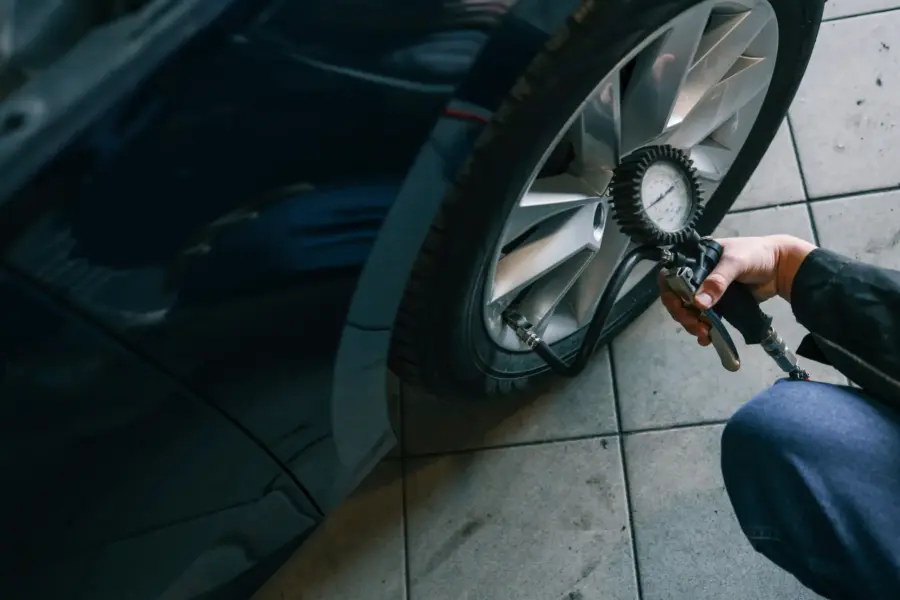
Inflation should follow the vehicle manufacturer’s placard or owner’s manual. Changing pressure to make the sidewall look smoother is not a repair. These inspection and inflation principles appear in the USTMA Tire Care & Safety Guide.
How do the findings determine replacement?
If inspection identifies a normal construction indentation and finds no separate reason to remove the tire from service, the indentation itself does not require replacement.
A confirmed bulge, exposed cords, deep cuts or cracks, or internal damage changes that decision. Remaining tread does not make structural sidewall damage acceptable.
If replacement is recommended, ask which finding requires it: the outward bulge, visible reinforcing material, a deep injury or damage found inside. If the explanation is that the depression is a normal construction feature, ask whether any separate problem was found. These questions keep the decision tied to the condition of your tire.
Patching is not a remedy for a damaged sidewall. USTMA limits puncture repairs to eligible tread injuries and requires an internal inspection before repair. USTMA’s repair guidance also recognizes manufacturer restrictions. A tread puncture and a sidewall defect therefore lead to different decisions. The possibility of repairing an eligible tread puncture does not make a sidewall bulge repairable. Our explanation of whether a plugged tire can be patched covers that separate tread-repair question.